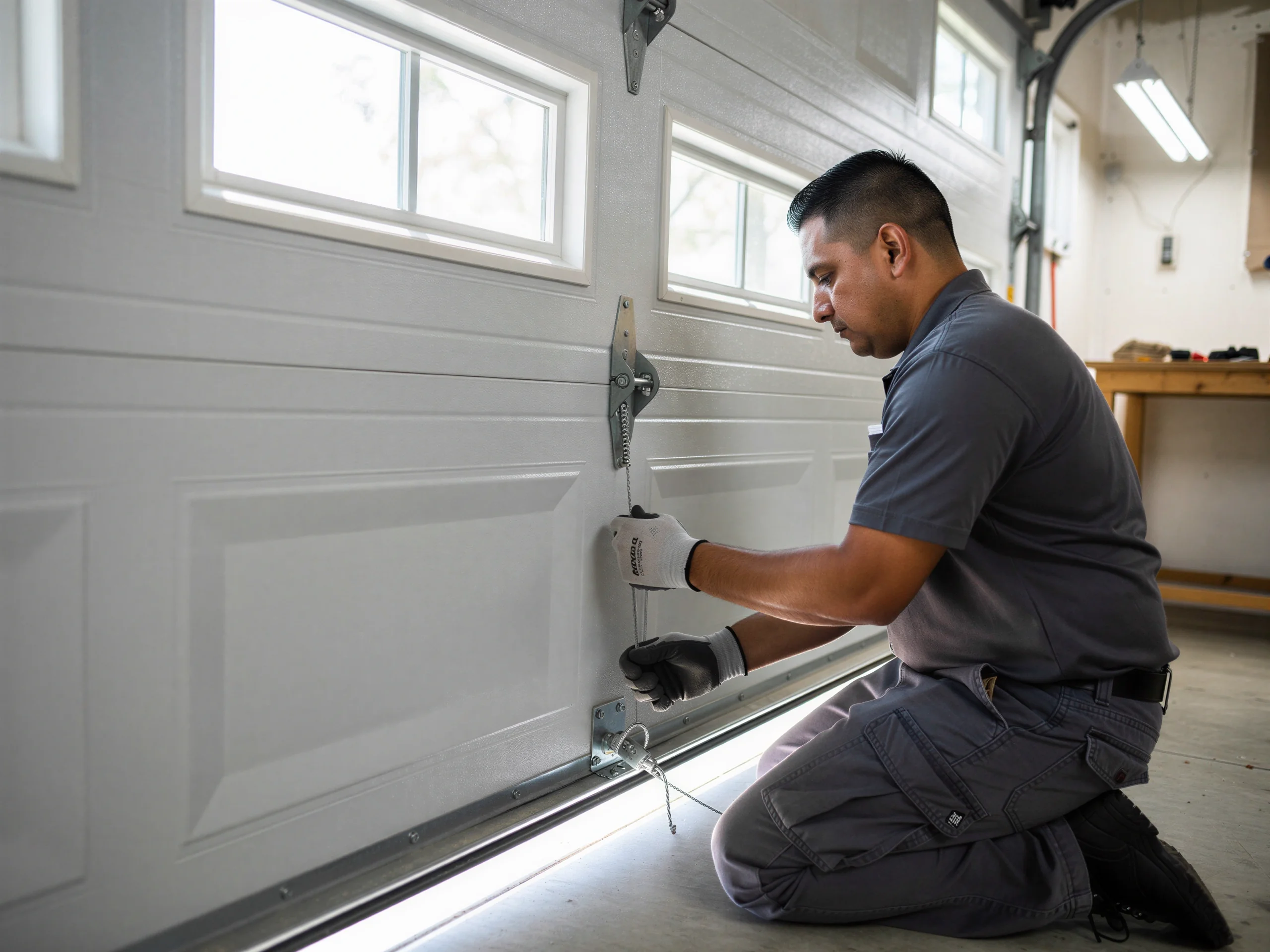
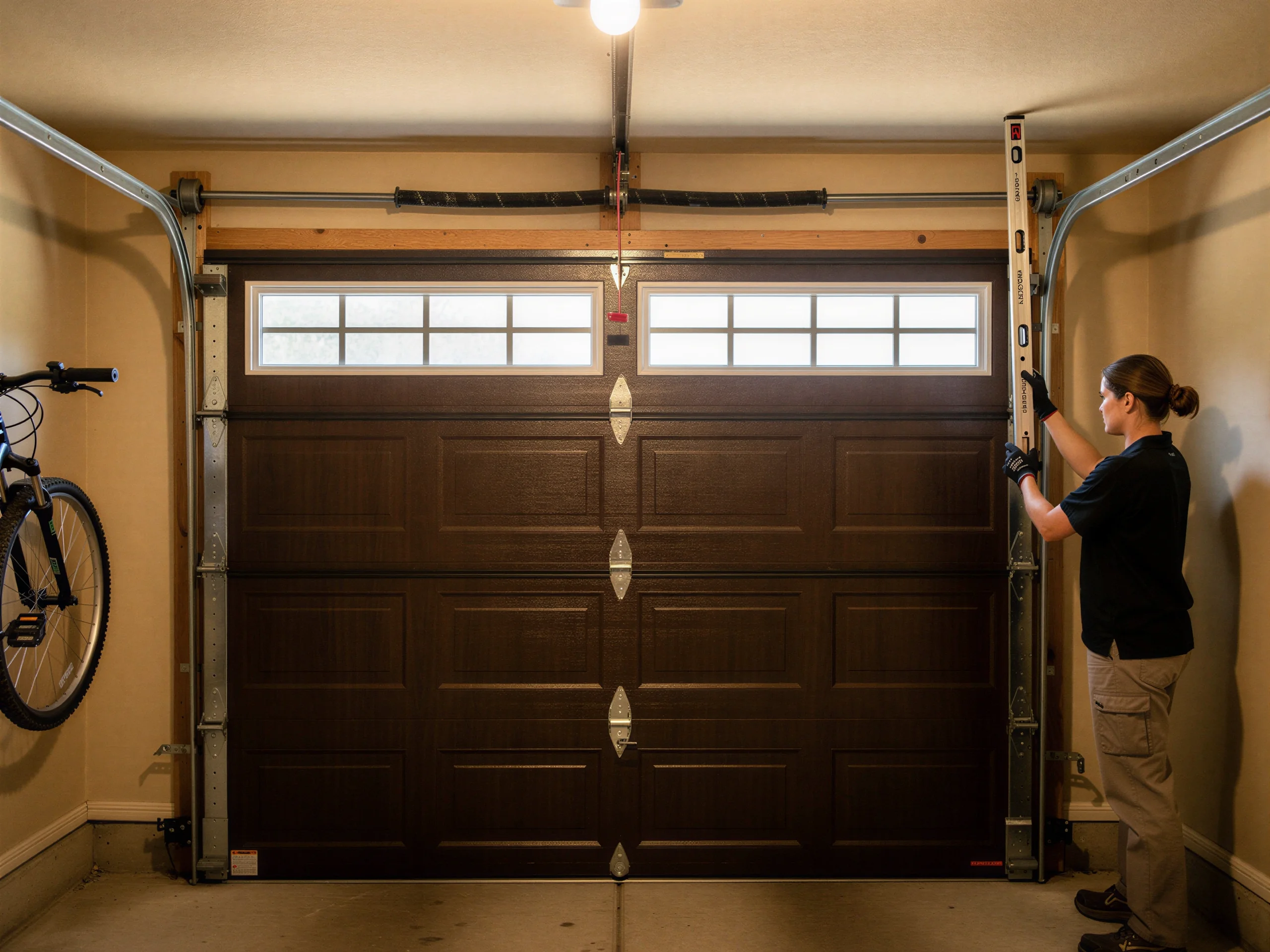
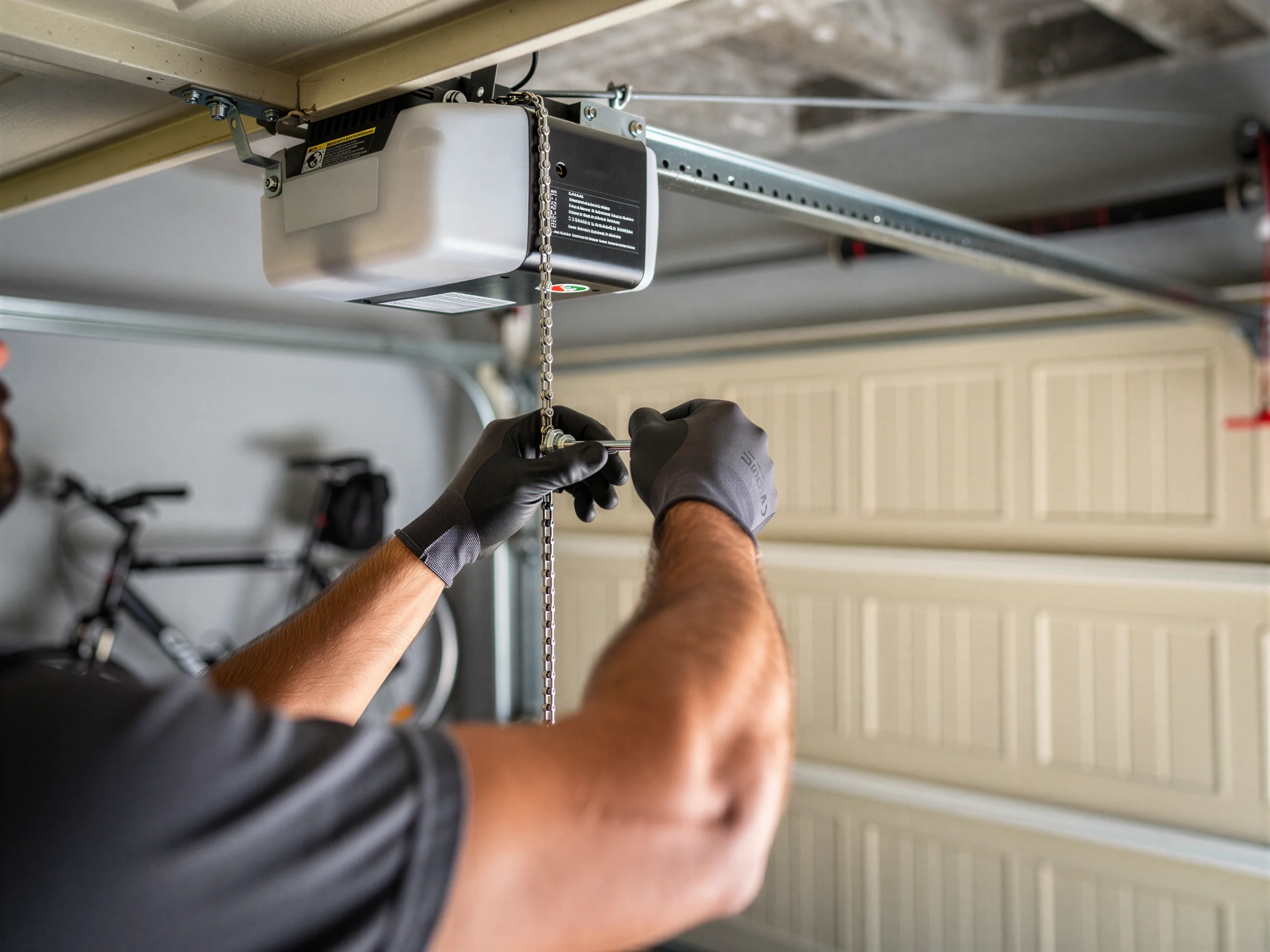
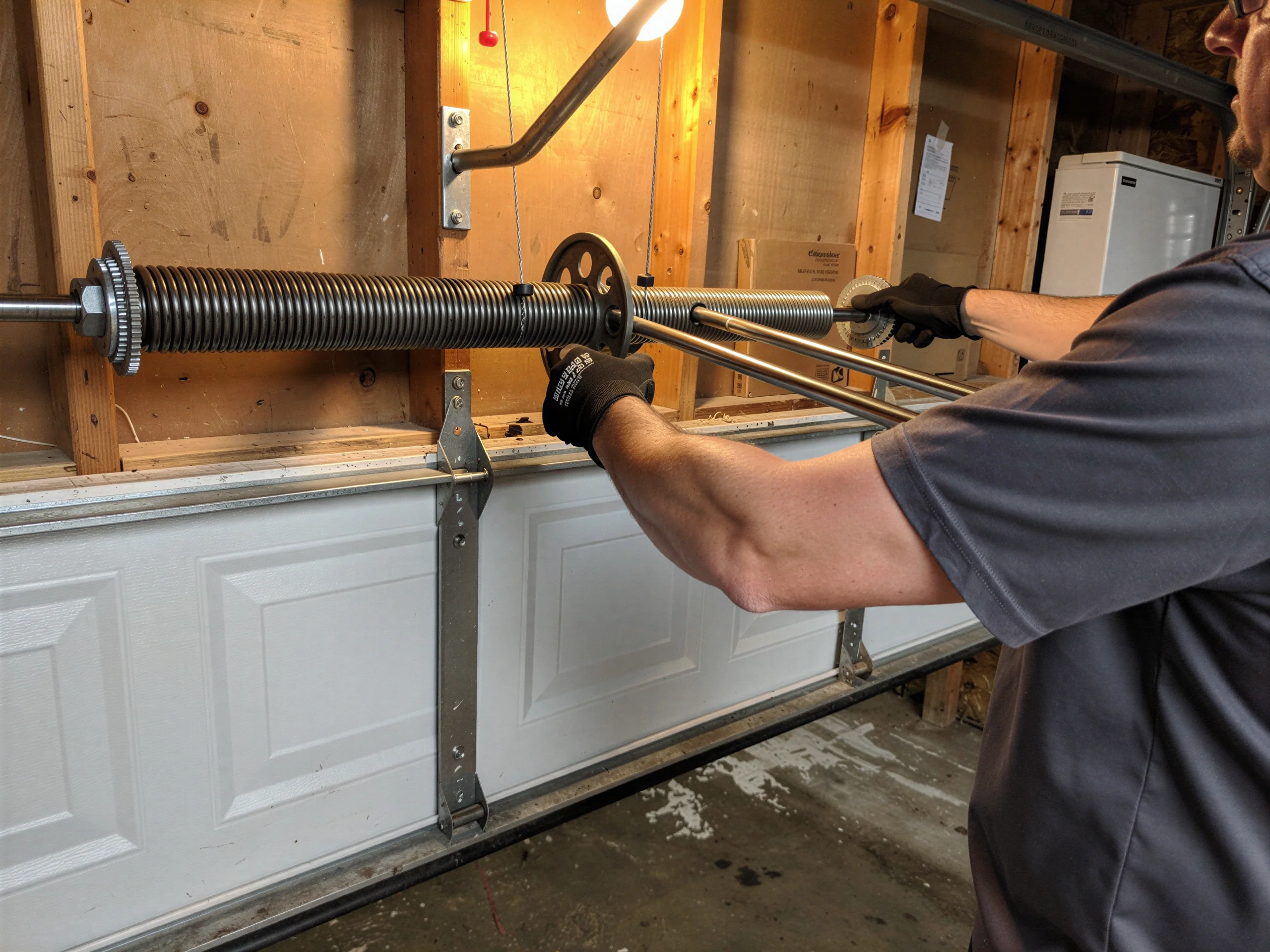
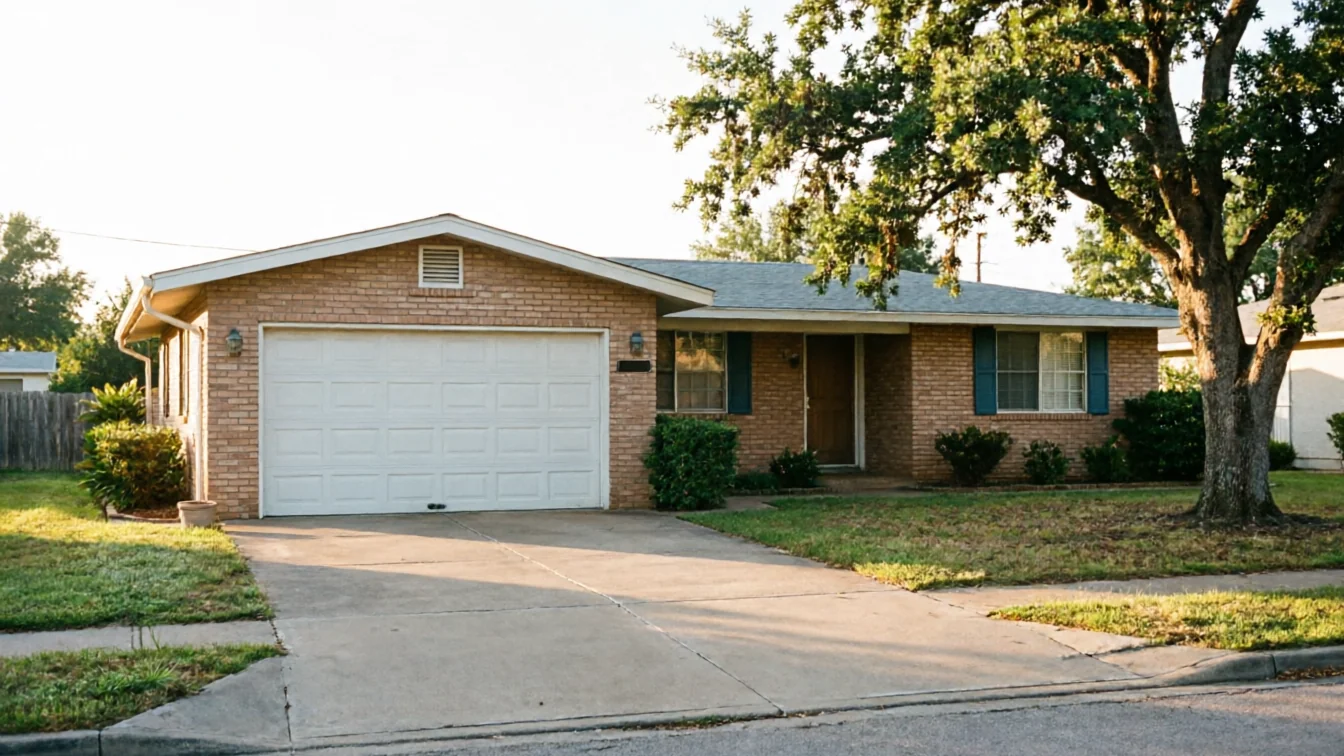
A 2012-era door in Bee Cave is built differently than one from the 1980s stock found elsewhere in the service area, and the failure points follow suit. The torsion spring is sized to a lighter, more standardized door weight, so when it goes, it's usually a clean break rather than a stretched, sagging coil. The opener is almost certainly a modern safety-sensor unit, so a door that won't close is more often a blocked or misaligned sensor eye than a mechanical jam. Rollers tend to be nylon rather than steel, which means less noise complaints but more wear-related binding as the nylon ages and cracks.
The moderate heat band this area sits in doesn't push lubricants to failure the way extreme heat zones do, but a decade-plus of summer cycling still dries out factory grease on rollers and hinges faster than most owners expect. We see that show up as a grinding or chirping sound before anything actually breaks - worth a call before it becomes a stuck door.